What to check before booking a helicopter flight over Barcelona
A flight over Barcelona looks simple from the outside: choose a route, pick a date, then turn up. The details that matter are quieter. A good booking decision depends on what you want to see, how the route fits your day, and whether the terms are clear before you pay. The same applies whether this is a special occasion or a new way to understand the city from above.
Barcelona rewards an aerial view because its shapes are so distinct. The grid of Eixample, the sea edge, the hills and the river mouth all sit close together. From the air, the city reads less like a set of separate sights and more like a plan. That is the appeal, and it is also the reason to check the route carefully rather than choosing on the basis of a single landmark.
Start with the route, not the aircraft
The first thing to check is where the flight actually goes. A route can sound impressive while spending much of its time away from the places you hoped to see. Look for a clear description of the flight route, including the main areas covered and whether the path follows the coastline, the city centre, or both. If the route is described only in broad terms, ask for the landmarks expected on a normal day.
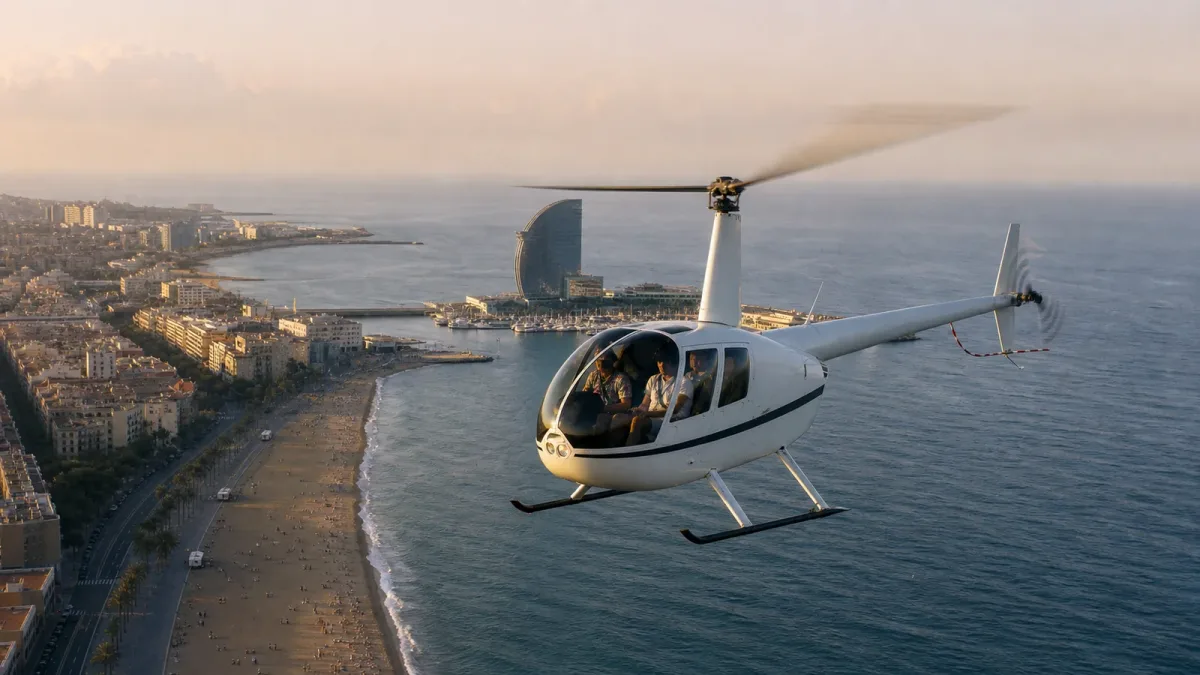
Think about what you want from the aerial view. Some people want the city fabric: avenues, rooftops, parks and the ordered blocks that make Barcelona easy to recognise from above. Others want the contrast between the built city and the water. A route that passes the Sagrada Familia may feel different from one centred on the Port of Barcelona or the open edge of the Barcelona coastline. Neither is automatically better. The right choice depends on whether you are chasing famous sights, geography, or a general sense of place.
Also check how the route begins and ends. The helipad matters because it shapes the whole experience. A departure point close to your hotel or other plans makes the flight easier to fit into a day. A distant starting point can add travel time, parking questions and a tighter margin if something runs late. If you are comparing options, look at the meeting point, arrival instructions and what happens if you are late.
Check the flight duration in real terms
Flight duration is often the number people compare first, but it needs context. A short flight can still feel full if the route is focused and the views are close. A longer flight can feel scattered if much of it covers areas that do not interest you. Read the duration as part of the full experience, not as a measure of value on its own.
Find out whether the quoted time means time in the air or the whole appointment. These are not the same. The full visit may include check-in, a safety briefing, boarding and time after landing. That does not make the extra time a problem, but it changes how you plan. If you have lunch, a train or another booking afterwards, allow a sensible gap rather than building a tight connection.
It is also worth checking whether the flight time is fixed or approximate. Weather, air traffic and operational decisions can affect the path and pace. A clear explanation of what may change helps you judge whether the option suits your schedule. The aim is not to remove every variable, because that is not realistic for any flight. The aim is to know where the flexibility sits.
Look closely at visibility and viewpoint
The quality of an aerial view depends heavily on conditions. Clear light makes distant buildings readable. Low cloud, haze or strong glare can reduce what you see, especially around the coast. If your main reason for booking is photography, check what the operator says about visibility and whether the seating arrangement affects your view.
Seat position can shape the experience more than many first-time flyers expect. Ask whether seats are allocated, whether everyone has a window view, and whether the route is flown in a way that gives each passenger a fair view of the main sights. If one side of the aircraft faces the city and the other faces the sea, that difference may matter to you.
Photography rules are another practical point. Check whether cameras and phones are welcome, whether any restrictions apply, and whether flash or other equipment is discouraged. You do not need a detailed photography policy for a casual visit, but you should know the basics before you pack. Loose items are a common concern on small aircraft, so think about how you will carry a phone, camera or sunglasses securely.
Read the booking terms before you commit
Before paying, check the date, time, meeting point and what is included in the price you are shown. A booking can look straightforward until small details are missed, such as whether a date change is allowed or what happens if you need to cancel. Terms vary, so read them as part of the decision rather than after it.

The phrase helicopter tour barcelona can cover different styles of experience, so do not assume two options are alike because the wording looks similar. Compare the route, appointment length, group size and conditions in plain terms. If a detail is missing, a short question before booking is easier than a difficult conversation later. Clear answers at this stage often say a lot about how well the visit will be organised.
Check the passenger details too. Age limits, weight limits and rules for children can affect who can take part. These are normal parts of flight planning, not minor formalities. If your group includes children, older passengers or anyone with mobility needs, confirm the practical arrangements in advance. The more specific your situation, the more useful it is to ask directly.
Ask what happens on the day
A calm arrival makes a difference. Check where to go, when to arrive and who to ask for. If the meeting point is not the same as the helipad, note the difference. A clear arrival plan reduces the chance of rushing, and it gives you time to listen to the safety briefing without feeling half prepared.
The briefing itself is worth taking seriously. It usually explains boarding, movement around the aircraft and what to do in the unlikely event of a problem. Listen even if you have flown before, because procedures differ. Wear comfortable clothing, keep bags simple and follow instructions about where items can be carried. These are ordinary travel habits, but they help the visit run smoothly.
Weather is the one area where flexibility helps. Check whether there is a stated approach for poor visibility or unsuitable conditions. If a flight is delayed or changed, you want to know how you will be told and what options are available. This matters especially if you are visiting Barcelona for a short stay and cannot easily move plans around.
Match the flight to the rest of your visit
Think about where the flight sits in your wider itinerary. A morning flight may suit photographers and quieter streets. A late afternoon flight can change the colour of the city and the feel of the water. The right time depends on what you value, and on how the light falls in the season you are visiting. A midday flight may be clear and direct, while a softer light can make the city look more layered.

For many visitors, the best approach is to pair the flight with nearby plans rather than treating it as an isolated activity. If the route includes Montjuïc Castle, you may already know that area well enough to appreciate seeing it from another angle. If the flight focuses on the waterfront, a walk by the port before or afterwards can make the aerial view easier to place. The flight becomes more meaningful when you can connect what you saw from above with what you see on the ground.
One mention of helicopter tour barcelona in your planning is enough to start the search, but the decision should rest on specifics. Look at the map, read the terms, check the practical details and be honest about what you want to see. A well-chosen flight is not simply the one with the grandest description. It is the one whose route, timing and conditions fit the way you want to experience the city.
Booking becomes easier when you reduce the choice to a few clear questions. Where does the flight go? How long is the appointment? What are the conditions if plans change? Who can take part? Once those answers are clear, the remaining decision is more about taste. That is a far better position than choosing on instinct and hoping the details work out.